Who actually decides BC's drug policy?
Not your city council. Not the federal government. In BC, drug policy decisions sit with the Province.
The BC government declared a drug overdose public health emergency in 2016. Since then, most of the big decisions, where sites go, how they run, and who gets a say, have been made at the provincial level.
That means the Minister of Health calls the shots. Regional health authorities like Vancouver Coastal Health carry them out. Your city councillor can object. Your mayor can object. But they cannot legally block it.Right now, the Minister of Health is Josie Osborne. She is the person responsible for how these decisions get made, and whether your community gets a say before they do. Most people have no idea how it works.
BC has been in a drug overdose public health emergency for almost ten years.
Ten years.
The Province declared a public health emergency in April 2016. And it’s still ongoing.
More than 15,000 people have died since then. BC paramedics still respond to an average of 108 overdose events every single day.
Billions of dollars have been spent. Policies have been introduced. The crisis is still concentrated in the same Downtown Eastside it was a decade ago.
At some point it is fair to ask: is what we are doing actually working?
The City of Vancouver spends $47 million a year in the Downtown Eastside. Some estimates put the total closer to $6-14 million a day.
The City of Vancouver alone spends an estimated $47 million every year on homelessness, mental health, and addiction services in the Downtown Eastside. That does not include policing costs. It does not include provincial or federal spending.
When you add all levels of government together, estimates range from $6 million to $14 million per day going into a few city blocks.
$6M x 365 days = $2.19 billion a year — low end
$14M x 365 days = $5.11 billion a year — high end
That is a lot of money.
The question worth asking is: is it helping the people who need it?
Nobody knows where the money is going in the Downtown Eastside. Not even the people spending it.
The Province appointed former Vancouver mayor Larry Campbell to find out why things aren't improving in the Downtown Eastside. After six months on the ground, here is what he heard directly from the organizations receiving public funding:
"We don't know where the money's going."
These aren't critics from the outside. These are the people running the programs.
Campbell said it himself: "I go down and I look and I don't see a huge amount of improvement."
The money is there. The results aren't. Someone should be asking why.
[Read the full story: Daily Hive, April 2026]
What is an Overdose Prevention Site?
You may have heard the term. Here is what it actually means.
An Overdose Prevention Site, or OPS, is a place where people can bring their own illegal drugs and use them in front of trained staff. If they overdose, staff step in immediately.
People bring their own drugs. The site does not provide drugs.
What the site does provide, for free:
- Needles
- Drug pipes and stems
- Alcohol swabs
- Filters and cookers
- Condoms
All of it is publicly funded. All of it free.
Staff watch, respond to emergencies, and can connect people to housing or treatment if they want it.
In Vancouver there are currently 12 of them. They are funded by Vancouver Coastal Health and operated by non-profit organizations. They are legal under a provincial order signed by the Minister of Health, Josie Osborne.
How does a neighbourhood actually get chosen for an overdose prevention site?
There is no public application. No community vote before the decision gets made.
Vancouver Coastal Health runs an internal search. They assess potential sites based on their own criteria. When they find one that works for them, they sign a lease.
Then they tell you.
When an overdose prevention site opened nearby, violent crime went up 13%. When it closed, the numbers came back down.
When an overdose prevention site operated at 1101 Seymour Street, Vancouver Police tracked what happened to the surrounding area. At a public community meeting on May 28, 2026, VPD Constable Steve Rai shared the numbers:
- Calls for service to the block increased by 51.3%
- Once the site closed, calls returned to pre-OPS levels
- Violent crime across the entire surrounding district increased by 13% in the first year of operations
These are VPD’s statistics.
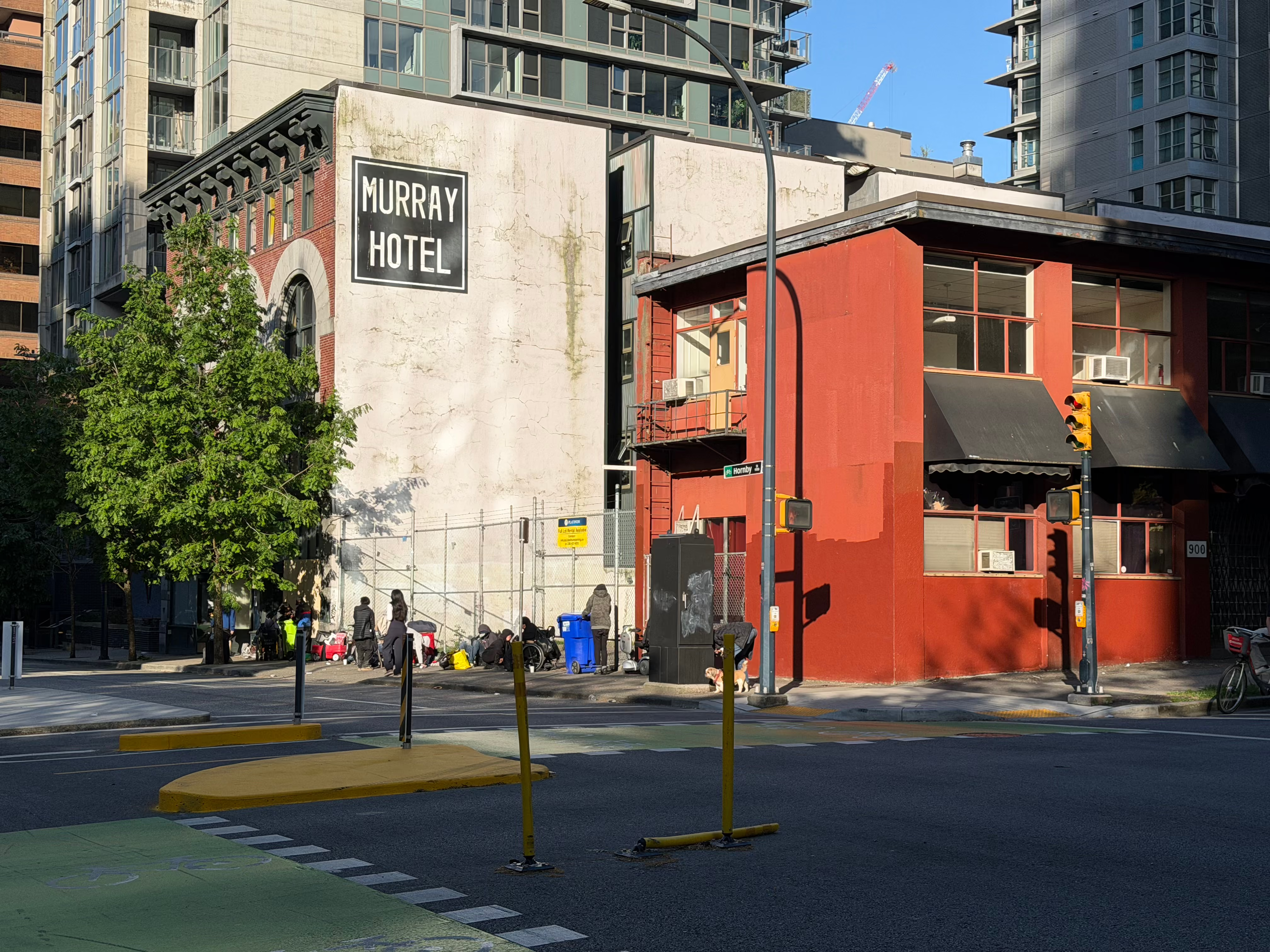
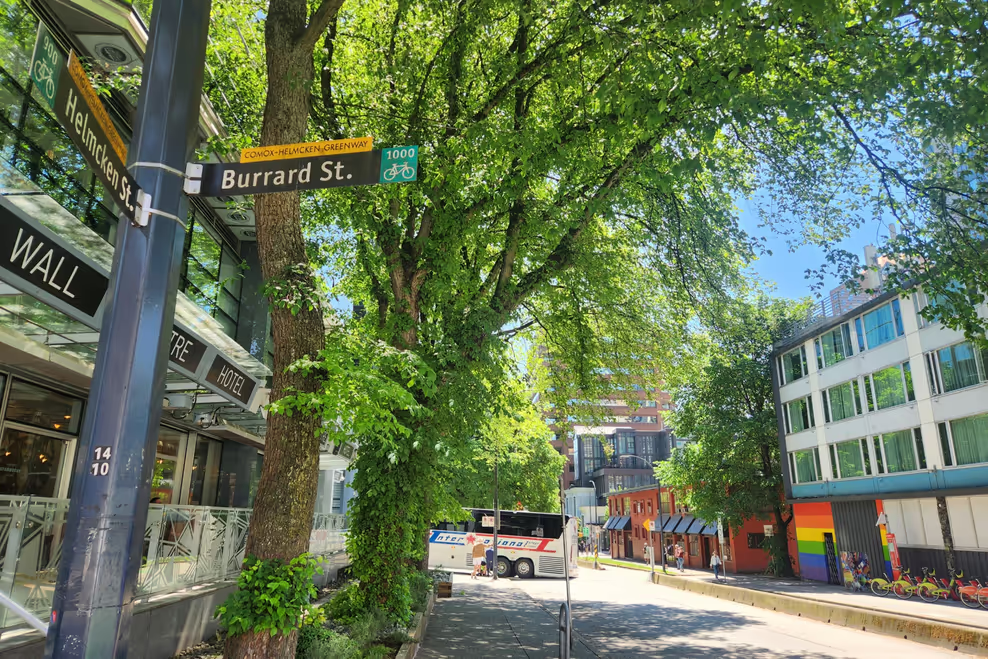
When the site moved, the numbers went back down. Then the site moved again. To a new neighbourhood. 900 Helmcken Street is where they want to put it next.
There is a federal standard for consulting communities before a drug consumption site opens. BC’s overdose prevention sites are specifically designed to skip it.
For a supervised consumption site to open, the federal government has to approve it first. That process takes years. Operators have to talk to local government, police, businesses, and residents nearby. They have to write down what people say. They have to explain how they plan to address concerns.
BC created a second type of site called an overdose prevention sites specifically because that process was too slow.
An overdose prevention site does not need federal approval. There is no required consultation with the neighbourhood. There is no process for residents to formally raise concerns before it opens.
Vancouver Coastal Health picks a location, signs a lease, and announces it.
The question worth asking is: should a decision that affects your neighbourhood not require your input?
BC declared a drug overdose public health emergency in 2016. That declaration is still in effect today. It has never ended.
When a public health emergency is declared, the government gets special powers to act fast. Normal processes slow things down. The emergency is meant to fix that temporarily.
BC declared its drug overdose emergency in April 2016. It was supposed to be a crisis response.
Ten years later it is still active. And the special powers that came with it — including the power to open drug consumption sites in any neighbourhood without a public approval process — are still being used today.
In 2016, 997 people died from toxic drugs in BC. Last year that number was 1,833. The emergency that was declared to fix the crisis has outlasted three elections, multiple governments, and billions of dollars in spending.
At some point an emergency is no longer an emergency. It is just how things work now.
BC made it legal to carry hard drugs in 2023. Then three years later, they changed their minds.
In 2023, BC became the first province in Canada to decriminalize personal possession of small amounts of illegal drugs. Adults could carry opioids, cocaine, meth and other substances without being arrested.
The idea was that removing the fear of arrest would make it easier for people to ask for help.
It was supposed to run for three years.
In January 2026, Premier David Eby said it "didn't work." Health Minister Josie Osborne announced the province would not renew it. On February 1, 2026, carrying those same drugs became illegal again.
No referendum. No election. One minister's announcement.
Think about that for a second. A major drug policy came and went in three years. Most people didn't even know it happened. And we're still no closer to fixing the problem.
Does anyone actually have a plan?
Nobody has ever published the rules Vancouver Coastal Health uses to choose where an overdose prevention site goes.
Vancouver Coastal Health says location decisions are based on "public health data and demonstrated need." That sounds reasonable. But there is no public document that explains how a specific street address gets chosen over another.
No scoring criteria. No published checklist. No independent review.
It is an internal decision, made by health authority staff, with no requirement to explain or justify the specific location to the community it affects.
The track record of those decisions speaks for itself.
In Vancouver, the original Seymour Street OPS was approved despite being near a children's playground and a planned daycare. City councillors flagged it. VCH opened it anyway.
Nobody outside Vancouver Coastal Health knows exactly how these decisions get made. There is no public process to find out.
If an overdose prevention site is planned for your street, nobody is legally required to tell you.
There is no law that requires Vancouver Coastal Health to notify residents before choosing a location. There is no requirement to hold a public meeting. There is no process for neighbours to formally object before a decision is made.
Vancouver Coastal Health finds a location.
Signs a lease. The decision is made.
The site is opening.
This is not an oversight. It is how the system was designed. An OPS operates under a public health emergency order — and emergency powers do not come with neighbourhood notice requirements.
The question worth asking is: ten years into this emergency, should that still be acceptable?

.png)









.png)
